
Efficient Asset Management with Real-Time Monitoring
Event Driven Inspection
Event Driven Inspection
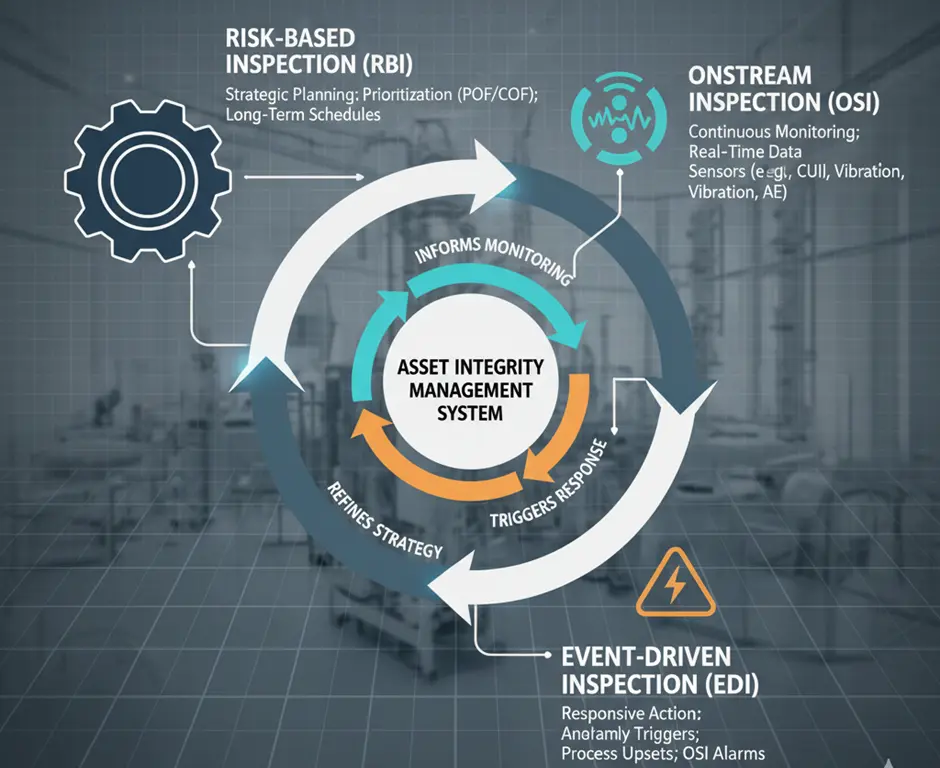

What It Does
Event-Driven Inspection enables real-time risk notifications when an asset’s integrity is threatened. Using pre-defined thresholds for key process variables, the system detects when those limits are exceeded and immediately alerts operators — helping them act before a potential issue escalates.
Why does it do it?
The Gap: Why EDI is Needed
Rapidly Accelerating Damage
Some damage mechanisms (e.g., localized corrosion, stress corrosion cracking) can accelerate quickly and may not be detected by routine RBI intervals or continuous OSI unless specifically monitored.
Operational Changes/Upsets
Process changes, excursions, or upsets can introduce new stresses or accelerate existing degradation, necessitating immediate reassessment beyond scheduled plans.
Anomalous Sensor Readings
OSI might indicate an anomaly, but further investigation (an "event-driven" inspection) is often required to understand its root cause and severity.
Third-Party Information
Incidents at similar facilities or new industry findings can trigger the need for immediate localized inspections.
Unforeseen Circumstances
External events (e.g., seismic activity) or maintenance interventions can impact asset integrity.
Key Benefits
- Optimized Maintenance Costs
- Improved Asset Integrity Knowledge
- Increased Operational Flexibility
- Compliance and Due Diligence
- Reduced Unscheduled Downtime
Real-Time Integrity Monitoring for Proactive Decision-Making and Inspection.
proactively identifying and addressing emerging threats, EDI reduces the likelihood of catastrophic failures, protecting personnel and the environment.
Early detection of degradation allows for planned interventions rather than reactive, emergency shutdowns, minimizing production losses.
Discover an Array of Visionnect’s Offerings

Your Bridge to Visionnect
Subscribe for Exclusive Updates.